Next Generation Robotics Empowered by Artificial Intelligence
Imagine a world where robots don’t just follow instructions but genuinely understand their environment, adapt on the fly, and even anticipate what you need before you ask. This isn’t science fiction anymore, it’s the reality being shaped by the convergence of robotics and advanced computational intelligence.
The Evolution: From Mechanical Arms to Thinking Machines
It wasn’t so long ago that robots were little more than programmable arms, tirelessly repeating the same task in a factory. They were fast and strong, but not exactly “smart.” If you’ve ever watched an old industrial robot at work, you know the drill: pick, place, repeat, no room for surprises. But as computational models have grown more sophisticated, robots have started to break free from these rigid routines.
Consider the Roomba, a household name in robotic vacuuming. Early models simply bounced around your living room, hoping to cover every inch by chance. Today’s versions map your home, remember furniture layouts, and even suggest cleaning schedules based on your habits. That leap from random movement to purposeful navigation is thanks to advances in machine learning and sensor fusion, technologies that allow robots to perceive and interpret the world much like we do.
In manufacturing, companies like FANUC and KUKA have integrated adaptive algorithms into their robots, enabling them to adjust to variations in parts or detect anomalies in real time. This flexibility means fewer production stoppages and higher-quality products, as highlighted in McKinsey & Company research on
How Intelligence Transforms Robotics
So what sets these new machines apart? It’s not just about crunching numbers faster; it’s about learning from experience and making decisions in uncertain environments. Let’s break down some of the core capabilities driving this revolution:
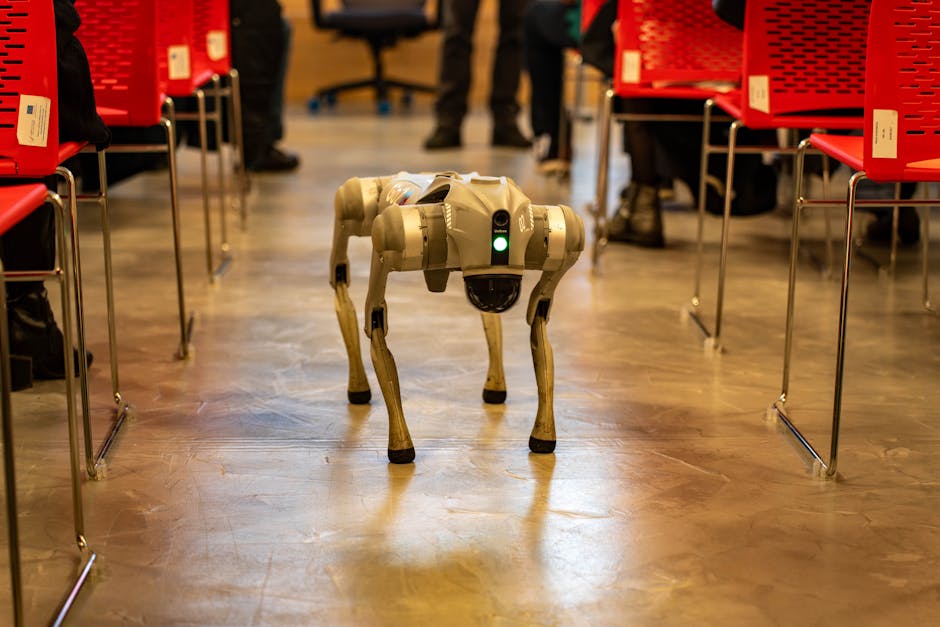
- Perception: Modern robots use cameras, microphones, and touch sensors to build a rich understanding of their surroundings. For example, Boston Dynamics’ Spot robot can navigate rough terrain by constantly analyzing visual and spatial data.
- Reasoning: Instead of following fixed scripts, next-gen robots weigh options and choose the best course of action. Self-driving cars from Waymo or Tesla must decide when to brake, accelerate, or change lanes, all in real time.
- Learning: Robots can now improve over time by analyzing past successes and failures. Amazon’s warehouse robots optimize their routes based on traffic patterns and shelf locations.
- Collaboration: New systems are designed to work safely alongside people. Collaborative robots (cobots) from Universal Robots adapt their speed and force when a human steps nearby, reducing workplace accidents.
This shift is akin to teaching a child not just to memorize multiplication tables but to solve real-world math problems by understanding concepts and applying them flexibly.
Where Next-Gen Robotics Are Making Waves
The impact of intelligent robotics is rippling through nearly every sector. Let’s look at a few standout examples:
| Sector | Robotic Application | Impact |
|---|---|---|
| Healthcare | Surgical assistants (e.g., da Vinci Surgical System) | Greater precision, minimally invasive procedures, faster recovery times |
| Logistics | Automated guided vehicles (AGVs) in warehouses | Faster order fulfillment, reduced labor costs |
| Agriculture | Drones and harvest robots (e.g., Agrobot) | Efficient crop monitoring and selective harvesting |
| Home & Personal Use | Smart vacuum cleaners, lawn mowers | Convenience, time savings for consumers |
| Public Safety | Search-and-rescue drones (e.g., DJI Matrice series) | Rapid disaster response, improved safety for first responders |
The da Vinci Surgical System is a particularly striking example. Surgeons use its robotic arms to perform delicate operations with a level of steadiness no human hand could match. According to Nature Scientific Reports, these systems have contributed to fewer surgical complications and shorter hospital stays.
The Human Side: Trust, Ethics, and Everyday Life
With all this progress comes a new set of questions: How do we ensure these machines act safely? Can we trust them with sensitive decisions? The answers aren’t always straightforward.
Take autonomous vehicles. While they promise fewer traffic accidents overall (Waymo reports millions of miles driven with only a handful of incidents) each mistake is scrutinized intensely. The challenge isn’t just technical; it’s about building public confidence. Would you trust a robotaxi with your morning commute?
There’s also the matter of jobs. While some worry that automation will replace workers, others see an opportunity for humans to focus on creative or interpersonal tasks while leaving repetitive chores to machines. The World Economic Forum predicts that while 85 million jobs may be displaced by automation by 2025, 97 million new roles could emerge, many requiring collaboration with intelligent machines (World Economic Forum).
Ethics loom large as well. Should a healthcare robot make decisions about patient care? Who is responsible if an autonomous drone causes harm? These are questions that policymakers, engineers, and society at large must answer together.
The Road Ahead: Challenges and Possibilities
No technology is perfect out of the gate. Next-generation robotics face hurdles ranging from battery life and data privacy to adapting to unpredictable environments. For instance, while warehouse robots excel in structured spaces, they can struggle with cluttered or dynamic settings, think about how easily a child might trip over a toy-strewn living room compared to a spotless warehouse floor.
Yet the pace of progress is astonishing. Researchers at MIT have developed soft robots that mimic the flexibility of octopus arms, opening up possibilities for gentle handling of fragile objects (MIT News). Meanwhile, companies like OpenAI are training robotic hands to solve Rubik’s cubes, demonstrating dexterity once thought impossible for machines.
- Key challenges ahead include:
- Ensuring robust safety protocols in unpredictable environments
- Balancing automation with meaningful human employment
- Protecting user privacy in data-rich applications
- Navigating ethical dilemmas as robots take on more responsibility
The good news? Each challenge brings with it an opportunity for innovation and for people from all walks of life to shape how these technologies fit into society.
If you’re picturing a future where robots are everywhere, you’re not alone. But rather than cold metal overlords, imagine helpful companions, machines that clean your home while you relax with family, guide you through airports when you’re lost, or assist doctors in saving lives. The next wave of robotics is less about replacing us and more about working alongside us, amplifying what we do best.
As these technologies continue to evolve, they’ll challenge us not just to rethink what machines can do but also what it means to be human in a world shared with ever-smarter companions.
References:
- McKinsey & Company: Automation, robotics, and the factory of the future
- Nature Scientific Reports: Impact of robotic surgery on patient outcomes
- World Economic Forum: The Future of Jobs Report 2020
- MIT News: Soft robotics inspired by octopus arms