If you’re buying an iPhone mainly for photos or video, start with what you shoot—not the screen size. A dedicated telephoto camera matters for concerts and wildlife. A larger battery matters when you’re filming all day. A folding screen can help with self-portraits and reviewing footage, but it doesn’t make the camera itself better.
This guide focuses on those shooting differences. For the separate question of how these phones feel to carry, see our iPhone 17 Pro Max, iPhone 18 Pro, iPhone 18 Pro Max, and iPhone Duo size comparison.
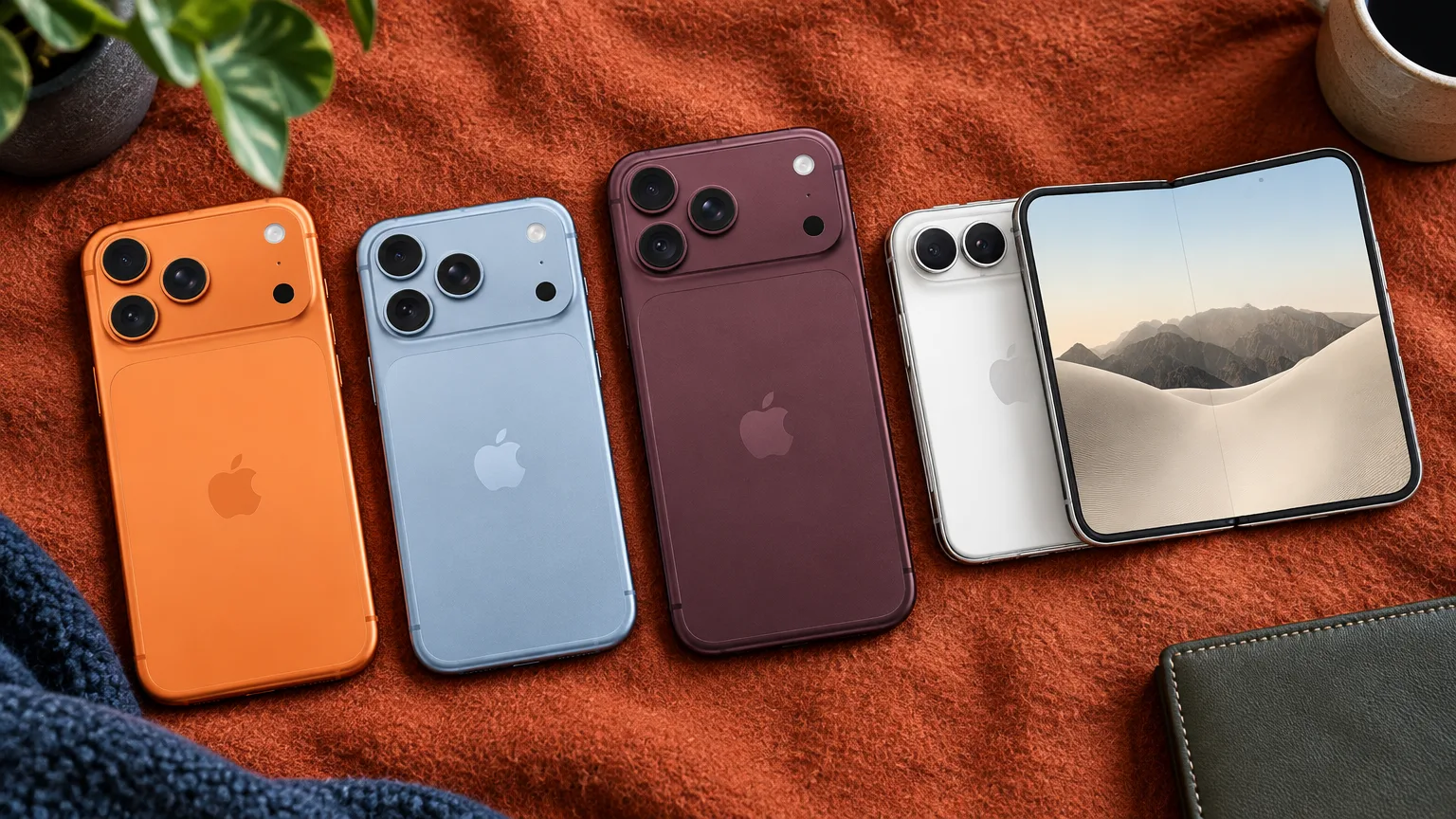
The quick list
- iPhone 17 Pro Max: Best for getting a versatile Pro camera system without needing the newest controls.
- iPhone 18 Pro: Best for hands-on photography controls.
- iPhone 18 Pro Max: Best for long shooting days and demanding video work.
- iPhone Duo: Best for hands-free group shots and self-filming.
iPhone 17 Pro Max: Best for a versatile Pro camera system
The 17 Pro Max remains a serious camera choice rather than a consolation prize. Its three 48-megapixel rear cameras cover main, ultra-wide, and dedicated 4x telephoto shooting. Apple also offers an 8x “optical-quality” option using the telephoto sensor; that’s useful reach, but it isn’t a separate 8x optical lens. ProRAW stills, macro photography, an 18-megapixel Center Stage front camera, and 4K Dolby Vision recording up to 120 frames per second on the main camera give photographers and casual filmmakers plenty to work with.
It also has substantial production features: Apple Log 2, ProRes RAW, and ProRes recording up to 4K/120 fps when recording externally. Those capabilities matter if your footage is headed into an edited project, though external recording adds gear and file-management work. Apple rates the phone for up to 39 hours of video playback—a playback figure, not a promise that it can record continuously for that long.
The reason to skip it is specific: the 18 Pro models add a variable-aperture main camera and direct controls for aperture, shutter speed, and white balance. If those controls are the reason you’re upgrading, buying the 17 Pro Max because it has “Pro” in its name misses the point. But if you mostly want flexible framing, telephoto shots, and capable video, compare the actual purchase price before paying more for a newer model. The 17 Pro Max launched at $1,199 in the U.S.; that historical list price isn’t a guide to what a seller will charge now.
iPhone 18 Pro: Best for hands-on photography controls
The 18 Pro is the most straightforward recommendation here for a photographer who wants to shape the shot in-camera. Its 48-megapixel main camera has four aperture settings: f/1.48, f/1.8, f/2.8, and f/4.0. A wider setting admits more light; a narrower one can keep more of a scene in focus. The phone can choose automatically, or you can set aperture, shutter speed, and white balance yourself and view a histogram. That’s a meaningful difference when you shoot indoor scenes, moving subjects, or compositions where foreground and background both matter.
You don’t give up lens choice to get those controls. Like the 18 Pro Max, the 18 Pro has 48-megapixel main, ultra-wide, and dedicated 4x telephoto cameras, plus an 8x optical-quality option. Its video tools include Apple Log 2, ProRes RAW, and ProRes up to 4K/120 fps with external recording. A published review of both 18 Pro models found the variable aperture easy to use, while also noting that extreme digital zoom remains a weak point. Don’t read “up to 40x digital zoom” as a promise of crisp 40x photographs.
Skip the 18 Pro if your main problem is running out of charge during long shoots. Apple rates it for up to 36 hours of video playback, versus 45 hours for the 18 Pro Max. Those aren’t recording-runtime measurements, but they establish the manufacturer’s endurance distinction. The 18 Pro starts at a U.S. list price of $1,199; retailer prices vary.
iPhone 18 Pro Max: Best for long shooting days and demanding video work
The 18 Pro Max combines the 18 Pro’s variable-aperture, three-camera system with Apple’s highest stated battery rating among these four phones. Its published specifications include the same main-camera aperture choices, 4x dedicated telephoto, 8x optical-quality option, Pro controls, and advanced recording formats. The reason to choose the Max isn’t a substantially different set of camera lenses; it’s having those tools with more endurance.
That distinction shows up in independent testing, though not as dramatically as the playback ratings might suggest. In Tom’s Guide’s standardized 5G web-browsing battery test, the 18 Pro Max averaged 18 hours, 27 minutes, against 17 hours, 54 minutes for the 17 Pro Max. It’s a useful comparison of general endurance, not a test of continuous 4K recording. The same publication’s side-by-side camera comparison favored the 18 Pro Max for a candlelit scene, where it retained more of the room’s low-light atmosphere.
For video work, the practical attraction is flexibility: you can shoot standard 4K Dolby Vision clips, then switch to Log or ProRes formats when a project calls for more editing control. You still need to plan storage and an external recording setup for the highest ProRes frame rate. Skip the Max if you won’t use its extra endurance; the 18 Pro gives you the same published rear-camera and recording features at a lower starting U.S. list price. The Max starts at $1,299, and selling prices vary.
iPhone Duo: Best for hands-free group shots and self-filming
The Duo’s strongest photography feature is its shape. Set it partly open and it can stand for a hands-free shot. Its outer display can show your subject a live view through Duo Preview, while Smart Take can detect when a group is ready and take the photo. Kid Cue uses animations on that outer display to draw a child’s attention toward the camera. Those are practical advantages for family pictures and solo creators who otherwise need someone behind the phone.
Its two rear cameras are both 48 megapixels: a main and an ultra-wide. The main camera provides a 2x optical-quality crop, but there’s no dedicated telephoto lens like the one on either 18 Pro. The Duo can record 4K Dolby Vision at up to 120 fps on its main camera and offers hands-free filming possibilities. Apple lists HEVC and H.264 as its recorded video formats; unlike the Pro specifications, its published Duo specifications do not list ProRes or ProRes RAW. For someone whose priority is telephoto reach or a ProRes-based workflow, the 18 Pro is the better fit.
There’s also a timing limit to any buying recommendation: as of October 5, 2026, the Duo has not shipped. Apple lists October 16 for U.S. preorders and October 23 for availability. Its U.S. starting list price is $1,999, with retailer prices subject to change. Its foldable shooting ideas are appealing, but prospective buyers should wait for independent camera and battery testing before treating them as proven advantages in everyday use.
Camera features at a glance
| Model | Best for | Rear cameras | Long-range option | Video capability | Apple video-playback rating |
|---|---|---|---|---|---|
| iPhone 17 Pro Max | Versatile Pro shooting | 48MP main, ultra-wide, telephoto | Dedicated 4x; 8x optical-quality | ProRes up to 4K/120 fps with external recording | Up to 39 hours |
| iPhone 18 Pro | Hands-on controls | 48MP main, ultra-wide, telephoto | Dedicated 4x; 8x optical-quality | ProRes up to 4K/120 fps with external recording | Up to 36 hours |
| iPhone 18 Pro Max | Long shooting days | 48MP main, ultra-wide, telephoto | Dedicated 4x; 8x optical-quality | ProRes up to 4K/120 fps with external recording | Up to 45 hours |
| iPhone Duo | Hands-free shooting | 48MP main, ultra-wide | 2x optical-quality crop | 4K Dolby Vision up to 120 fps on main camera | Up to 44 hours outer display; 31 hours inner display |
- View on Amazon
Iphone 17 Pro Max
- View on Amazon
Apple iPhone 18 Pro
- View on Amazon
Apple iPhone 18 Pro Max
- View on Amazon
Apple iPhone Duo
Playback ratings are Apple’s figures, not estimates of how long each phone can record video. The Duo’s inner- and outer-screen ratings also describe different ways of using it, so neither should be treated as a direct recording comparison.
How to choose by the shots you make
Choose a dedicated telephoto lens if you regularly photograph people onstage, distant details, or candid portraits from across a room. That favors the three Pro models over the Duo. For close subjects, wide scenes, and everyday clips, the lens gap may matter less than how you prefer to shoot: the Duo’s built-in stand and outward-facing preview solve problems the Pro phones don’t address in the same way.
Choose an 18 Pro model if you know you’ll use manual exposure controls or the variable aperture. Don’t pay for those features expecting every automatic snapshot to look dramatically different from a 17 Pro Max photo. Published 17 Pro Max and 18 Pro Max comparisons show a camera upgrade worth considering, not a reason for every 17 Pro Max owner to replace a working phone.
For video, decide where the footage goes after you press stop. If it’s mainly shared as shot, prioritize framing, stable capture, and enough battery for your day. If you color-grade footage or work with a production team, the Pro models’ Log and ProRes options deserve closer attention—along with storage and external-recording requirements. The format on a spec sheet only helps if it fits your editing process.
How these picks were chosen
The Duo assessment is necessarily more provisional because its October 23, 2026 release is still ahead.