A mission marker sits a few blocks away. You have the objective item, a working car, and three police cruisers behind you. The tempting move is to floor it toward the marker. In a game with a wanted system, that can be the worst route: the pursuit follows you into the next part of the mission, and every collision gives the police another chance to close in.
Wanted levels change what a successful mission looks like. Getting the item is only one step. You may also need to leave the scene, break contact, and arrive somewhere safe enough to finish the job. The best escape isn’t necessarily the fastest drive across the map. It’s the one that stops the police from finding you again.
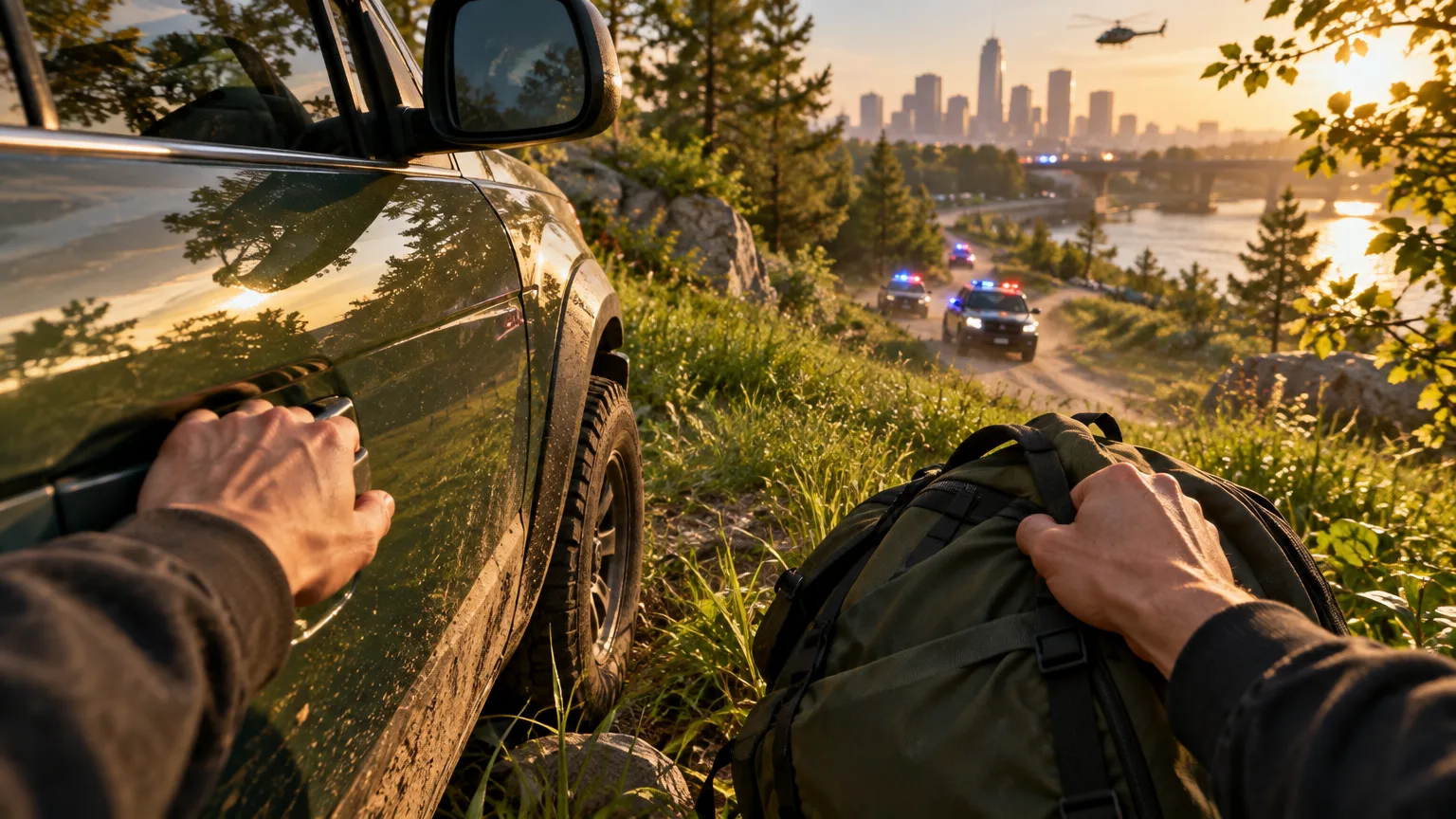
Why a few stars change the whole mission
A wanted meter compresses a complicated problem into a signal you can read at a glance: your actions have drawn attention, and the response is getting harder to handle. As pursuit escalates, a route that worked moments ago may become a trap. A straight road favors speed until police vehicles block it. A quiet side street offers cover until you draw officers into it.
That pressure makes the open world matter. An underpass is no longer scenery; it’s a break in visibility. A dense block gives you several possible exits. An exposed highway commits you to a long run with few places to hide. The system turns map knowledge into a skill without requiring a mission designer to prescribe one escape route.
The effect extends to choices made before a chase starts. If you’re stealing a vehicle for a job, do you park your getaway car facing the exit? If a mission offers a quieter approach, is the time saved by attacking worth the pursuit afterward? If your car takes heavy damage, can you afford another minute of hard driving? A wanted level puts a cost on noisy decisions, but it doesn’t tell you which decision to make.
Escalation also has to be legible. In Cyberpunk 2077, the police overhaul introduced with Update 2.0 tied the types and behavior of pursuing units to the player’s NCPD wanted level, with roadblocks and MaxTac among the possible responses. The point isn’t that every game uses the same five-step ladder. It’s that higher heat can change the kind of problem you face, not merely add more enemies.
A pursuit has two phases, and speed solves only one
While officers can see you, your first job is to create separation. A quick turn, a change in elevation, or a route they can’t follow directly may do more than a few extra seconds at top speed. But losing the vehicles behind you isn’t the same as ending the search. If you immediately reappear on the obvious exit road, you’ve given pursuers another chance to reacquire you.
This is the distinction many failed escapes miss: first break contact, then stay out of sight. CD Projekt Red describes the reworked Cyberpunk 2077 police system in those terms: players can escape on foot or by car, but need to keep out of the police’s sight. Rockstar’s Red Dead Redemption law-enforcement manual likewise distinguishes breaking line of sight and hiding from clearing the separate bounty left behind. These aren’t identical systems, so don’t assume one game’s timer, witness rules, or escape options carry over to another.
On PC, use the camera and minimap as deliberately as the accelerator. Check where officers are converging before choosing a turn. After you disappear from view, resist the urge to race through the nearest busy intersection. Take a less exposed route, put a building between you and the last known pursuit, and wait until the game actually indicates that the search has ended. If you’re spotted again, treat that as new information: your hiding place or route was too easy to cover.
The common mistake is to turn every chase into a fight. Shooting at police may open a gap for a moment, but it can also raise the threat you’re trying to escape. Unless the mission requires combat or you need space to survive, movement and concealment usually serve the objective better than winning a roadside battle.
Build an escape around the objective
Before a risky mission, spend a few seconds reading the map. Find the objective, then identify at least two exits from it. One should get you away from the scene quickly; the other should give you somewhere to break visibility if the first route fills with police. The shortest path to the destination may be a poor first path away from the crime.
A useful escape plan has three parts:
Leave cleanly. Point the getaway vehicle toward an open exit, not toward a wall you’ll have to reverse away from. Avoid starting a shootout beside the car you need to keep running.
Break contact. Once you have room, use a turn, an underpass, or another change of route that takes you out of view. Don’t keep driving straight merely because the road is wide.
Finish the search separately. Move away from the place pursuers last saw you, then avoid drawing attention while the game is still looking for you. Head for the objective only when doing so won’t pull the pursuit straight to it.
That plan should change with the mission. A fragile delivery vehicle makes collisions a bigger danger than a slightly longer route. A passenger or objective you must keep with you makes a vehicle swap less attractive. A timed task may leave little room to hide, so the preparation before the alarm matters more. Check the mission’s actual restrictions before committing to an escape you used successfully in free roam.
In GTA Online, tunnels are a legitimate way to shake pursuit; Rockstar’s starter tips for losing a wanted level recommend them as an alternative to paying Lester to remove it. The useful principle is broader than “always use a tunnel.” It’s to choose terrain that limits how easily pursuers can keep sight of you, then emerge somewhere that doesn’t send you directly back through their search.
For example, suppose a pickup in Los Santos leaves you wanted and your destination is across town. Driving straight there risks carrying police through the drop-off area. A better sequence is to turn away from the direct route, gain enough distance to enter a tunnel without officers immediately behind you, and take a different exit. Once the search ends, approach the destination on ordinary streets. The detour earns its time back by preventing a second chase at the finish.
Change tactics when the pursuit gets serious
At low heat, a short separation followed by a quiet route may be enough. At higher heat, assume the obvious escape will be contested. Roadblocks make a fast road less reliable; aerial pursuit can make open ground a poor hiding place. In Cyberpunk 2077, the added ability to quickhack NCPD officers and fight from vehicles gives players ways to create an opening, but those tools don’t replace the need to get out of sight. Use an ability to buy an exit, not as a reason to prolong the fight.
Vehicle choice matters, too, but there’s no universal “best getaway car.” Acceleration helps you clear the scene. Handling helps you make a tight turn without crashing. Durability helps if a mission forces contact. A huge, fast vehicle can be awkward when the only viable exit is a narrow alley. Pick for the route and objective, not just the speed shown in a garage menu.
On foot, the same logic applies at a different scale. Buildings, corners, and changes in elevation can break a sightline that an exposed road cannot. Running blindly into the next group of officers, though, only trades one pursuit for another. Look before crossing open space, and don’t confuse being temporarily unseen with being safe.
Know when the mission has its own rules
Open-world missions often borrow the wanted system without handing over full control of it. An escape may not count until every player loses the police. Rockstar’s GTA Online update notes describe a mission-progress issue in which other players had to wait for a teammate to lose their wanted level. That’s a practical reminder to read the objective text rather than assuming your own clear radar finishes the job.
In co-op, agree on the escape before everyone scatters. Decide who is driving, where the team will regroup, and whether losing the police is required before delivery. Give new teammates the rule they need before the alarm sounds—the same principle behind teaching rules without overwhelming new players. One player improvising a firefight can undo another player’s careful escape.
Pay attention to exceptions in free roam as well. GTA Online offers an in-game paid option through Lester to remove a wanted level. It’s an alternative to escaping, not proof that every chase can be skipped. Similarly, Red Dead Redemption separates its immediate pursuit from a bounty that can still matter afterward. Ask two questions: “Have I lost the pursuers?” and “Has this game cleared the consequence?” They may have different answers.
The smartest escape is the one you can repeat
A good wanted system rewards players who learn how its world is laid out. You stop seeing roads only as routes between markers and start judging corners, cover, traffic, and exits. When assessing open-world gameplay, that’s a useful test of the design: does pursuit make you use the city in interesting ways, and does the game make its rules clear enough to learn from a failed escape?
For the player, the repeatable method is straightforward. Plan an exit before raising the alarm. Create distance without escalating the fight. Break the pursuers’ view, move away from where they last saw you, and wait for the game’s all-clear before approaching the objective. Speed gets you out of the first block. Reading the pursuit gets you through the mission.